
Marknadsnyheter
FREYR Battery Sanctions Construction of its Inaugural Gigafactory

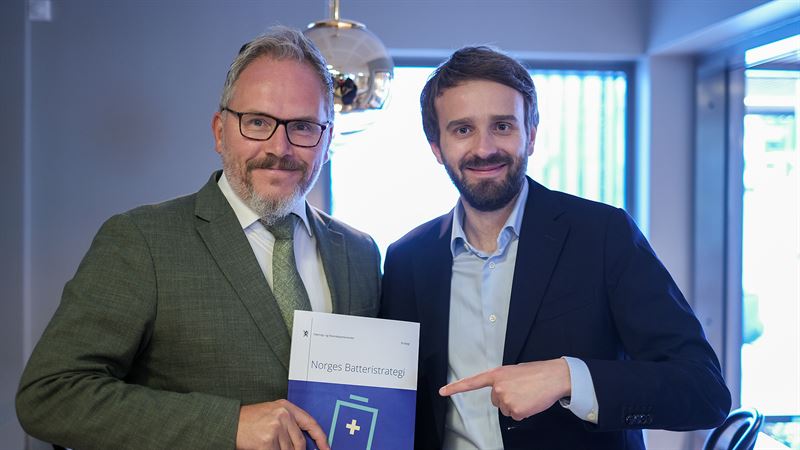

Increases plant capacity to 29 GWh, based on $1.6 billion in identified debt financing support, catalyzed by the Norwegian National Battery Strategy and Norway’s Export Credit Agency Eksfin’s indication of up to EUR 400 million in guarantees and/or loans
– FREYR’s Board of Directors has sanctioned construction of Giga Arctic (combined Gigafactories 1 & 2), the company’s first battery manufacturing facility under development in Mo i Rana, Norway
– FREYR is increasing the nameplate capacity of Giga Arctic to 29 GWh in response to improving battery supply-demand dynamics, ongoing commercial success, significant progress in developing supply chain channels for key raw materials and equipment, continued technical and product improvements, and project financing visibility
– Earlier today at FREYR’s development site in Mo i Rana, the Norwegian Government outlined its National Battery Strategy, which includes significant support from Export Finance Norway (“Eksfin”) to assist FREYR with project financing of Giga Arctic
– FREYR has identified total debt financing support of over $1.6 billion based on visibility from export credit agencies, multilateral development finance institutions and commercial banking partners, exceeding management’s leverage target for the $1.7 billion estimated total capital cost for the expanded Giga Arctic project
– FREYR intends to contract approximately 50% of Giga Arctic’s capacity to long-term offtake partners and reserve the remaining volumes to address exponentially growing market demand, providing annual revenue generating capacity of $2 billion upon optimization of production systems and cell chemistry
– Giga Arctic is expected to be one of the largest and most efficient battery facilities in Europe, with 50% lower anticipated capital spending per GWh of nameplate capacity and more than 200% higher production per employee than conventional Lithium-Ion battery plants in production today
– FREYR is raising its installed annual production capacity target to more than 200 GWh by 2030, twice the company’s previous ambition
– FREYR has recently secured a conditional offtake agreement (“COA”) with a major European energy technology customer for 25 GWh of battery cells from 2024 to 2028, in addition to the more than 100 GWh of previously announced COAs
New York, Oslo and Luxembourg, June 29, 2022, FREYR Battery (NYSE: FREY) (“FREYR”), a developer of clean, next-generation battery cell production capacity, announced today that the company’s Board of Directors (“The Board”) has approved the expansion of the planned Giga Arctic project under development in Mo i Rana, Norway, to an annual nameplate capacity of 29 GWh. FREYR’s Board of Directors has also approved the construction of Giga Arctic. The approval follows substantial completion of detailed plant engineering; the establishment of procurement frameworks with key raw material and capital equipment suppliers; and the announcements of conditional offtake agreements totaling more than 125 GWh from the planned start of production in 1H-2024 through 2030. Groundworks at the site are well advanced and the company has recently started casting foundation structures.
The Board’s decision coincides with the announcement of a letter of intent indicating guarantees and/or loan of up to €400 million from Eksfin, Norway’s export credit agency (“ECA”), and the recently announced National Battery Strategy by the Norwegian Government, which outlines meaningful governmental support for the developing battery industry in Norway.
“If we are to reach the goals in the Paris agreement, batteries will need to be produced in a more sustainable way with the lowest CO2 footprint possible. It is therefore important for Norway to define a clear direction and set ambitious goals for battery production in our country. The National Battery Strategy that we just launched, defines ten areas of key importance that will facilitate private investments so that companies along the entire value chain can set up sustainable and successful businesses in Norway. Our unmatched access to renewable energy makes batteries produced in Norway the greenest in the world. I am therefore very pleased and excited that FREYR Battery is moving along with its plans to establish a Gigafactory in Norway based on state capital and risk relief. It is an important confirmation that public and private partnerships are important to be successful in creating the green industry of the future,” said the Minister of Trade and Industry, Jan Christian Vestre.
“Today marks another significant milestone for FREYR on our path to giga-scale production of clean battery solutions. With our expanded plant capacity, accelerating commercial momentum, and strong support from Eksfin, other ECAs and financial institutions, Giga Arctic represents one of Norway’s largest industrial investments onshore in recent decades,” said Torstein Dale Sjøtveit, Founder and Executive Chairman of FREYR.
Governmental Support and Gigafactory Financing Plan
Today, the Norwegian Government announced the key elements of its National Battery Strategy at FREYR’s facilities in Mo i Rana, Norway. With the expected financial backing catalyzed by this strategy and support from other European governmental entities, FREYR has identified over $1.6 billion of potential debt financing support to fund development of Giga Arctic, including:
- A letter of intent received from Eksfin indicating guarantees and/or loan of up to €400 million;
- Anticipated loan guarantees exceeding $800 million from ECAs of three OECD countries based on capital equipment order frameworks for Giga Arctic from the same plant equipment suppliers to FREYR’s Customer Qualification Plant;
- Indications of support received from multilateral development finance institutions, which include potential loans of $300 million from the European Investment Bank (“EIB”) and $50 million to $100 million from the Nordic Investment Bank (“NIB”), respectively; and
- Targeted project financing from a consortium of commercial banks led by initial mandated lead arrangers Societe Generale and DNB, which are now formally launching the project financing process.
In addition, FREYR had $523 million of cash on its balance sheet as of March 31, 2022, and currently has multiple grant applications pending decision.
Tone Lunde Bakker, Chief Executive Officer of Eksfin, added, “Export Finance Norway’s most important task is to offer capital and risk relief to the green, Norwegian export industry. Long-term partnerships between state and private capital are needed to realize the transition to a zero-emission society; create local jobs; and take leading positions internationally. FREYR Battery’s factory can play a key role in building a powerful, high-tech value chain within batteries in Norway and the Nordic countries. Eksfin has therefore indicated participation in the financing of the project in collaboration with other financiers and investors. We wish FREYR good luck in the next, exciting phase and look forward to working closely with the growing Norwegian battery industry.”
Giga Arctic Development
The sanctioned Giga Arctic construction project includes eight production lines, a battery testing center, administrative facilities, and infrastructure at an estimated total capital cost of $1.7 billion. The updated cost relative to FREYR’s initial business plan, which was finalized in February 2021, is attributable to the following:
- A 150% increase in nameplate capacity on a chemistry equivalent basis to 29 GWh from the initial plan to construct two smaller Gigafactories in Mo i Rana1;
- Technical modifications and enhancements to the plant and its products that are intended to improve operational efficiency and economic returns; and
- Inflationary pressures and supply chain challenges.
FREYR has engineered and positioned Giga Arctic to be the most capital efficient battery plant in Europe, with 50% lower estimated capital expenditures per installed GWh of capacity compared to plants currently in operation or under construction. The company also expects Giga Arctic to be the most operationally efficient battery plant in Europe, generating an anticipated 200% higher production per plant employee compared to estimated averages at conventional Lithium-Ion battery facilities. These expected efficiencies are aided by FREYR’s recently announced long-term power purchase agreement (“PPA”) with Statkraft. Giga Arctic is expected to benefit from 100% renewable energy at prices that FREYR estimates to be substantially below those of other battery producing regions, while using less energy in production through the 24M Technologies SemiSolidTM cell manufacturing process and platform.
FREYR is also evaluating additional enhancements to the Giga Arctic development that include module and pack manufacturing, recycling and other applications which could add approximately $250 million of additional capital expenditures. Management expects the above investments to generate highly accretive returns on capital for the project should the company move forward with these initiatives. In addition, the company continues to evaluate its proposed joint venture with Aleees for a Nordic LFP cathode materials manufacturing plant.
Tom Einar Jensen, FREYR’s Chief Executive Officer, concluded, “Since our NYSE listing in July 2021, FREYR has made incredible progress on its goal of providing clean battery solutions to the world through speed, scale, and sustainability. Despite supply chain challenges and inflation, the fundamentals have never been better for the battery industry given the largest secular shift in human history towards the energy transition to address the climate emergency; the immediate need for energy security, localized power generation and storage; and the accelerating adoption of electric vehicles and battery energy storage systems. FREYR is playing a key role in addressing energy cost inflation, energy security and climate change.”
1 Gigafactories 1 & 2 were initially expected to produce NMC battery cells
***
About FREYR Battery
FREYR Battery aims to provide industrial scale clean battery solutions to reduce global emissions. Listed on the New York Stock Exchange, FREYR’s mission is to produce green battery cells to accelerate the decarbonization of energy and transportation systems globally. FREYR has commenced building the first of its planned factories in Mo i Rana, Norway and announced potential development of industrial scale battery cell production in Vaasa, Finland, and the United States. FREYR intends to deliver up to 43 GWh of battery cell capacity by 2025, over 83 GWh of annual capacity by 2028 and over 200 GWh of annual capacity by 2030. To learn more about FREYR, please visit www.freyrbattery.com
Investor contact:
Jeffrey Spittel
Vice President, Investor Relations
jeffrey.spittel@freyrbattery.com
Tel: (+1) 281-222-0161
Media contact:
Katrin Berntsen
Vice President, Communication and Public Affairs, FREYR
katrin.berntsen@freyrbattery.com
Tel: (+47) 920 54 570
Cautionary Statement Concerning Forward-Looking Statements
All statements, other than statements of present or historical fact included in this press release, including, without limitation, statements regarding (i) FREYR’s anticipated path to commercialization and giga-scale production of clean battery solutions; (ii) the development, timeline, capacity and other usefulness of the Giga Arctic project, including annual revenue generating capacity of $2 billion upon optimization of production systems and cell chemistry; (iii) the realization of FREYR’s capital spending plan; (iv) the progress and development of FREYR’s customer relationships and offtake agreements and supply chain partnerships, including the entry into any successful joint ventures with Aleees and FREYR’s intent to contract approximately 50% of Giga Arctic’s capacity to long-term offtake partners and reserve remaining volumes to address exponentially growing market demand; (v) the success of any capital raising paths to fund FREYR’s planned expansion; (vi) FREYR’s ability to convert any conditional agreements, letters of intent, anticipated loan guarantees, indications of support from multilateral development finance institutions and targeted project financing into definitive agreements; (vii) the status of FREYR’s mission to establish over 200 GWh of annual capacity by 2030 and its anticipated total conditional offtake volumes exceeding 125 GWh through 2030; (viii) the success and impact of any support from the Norwegian government for the developing battery industry in Norway; (ix) the success of FREYR’s accelerated commercial momentum; (x) the success of any anticipated debt financing support to FREYR to fund the development of Giga Arctic; (xi) the success of any transition to a zero-emission society and the role of FREYR’s factory in building a powerful, high-tech value chain within batteries in Norway and the Nordic countries; (xii) the ability of any technical modifications and enhancements to Giga Arctic and its products to improve operational efficiency and economic returns; (xiii) Giga Arctic’s status as the most capital efficient battery plant in Europe (and its 50% lower estimated capital expenditures per installed GWh of capacity compared to plants currently in operation or under construction); (xiv) Giga Arctic’s status as one of the largest and most operationally efficient battery plant in Europe, generating an anticipated more than 200% higher production per plant employee compared to estimated averages at conventional Lithium-ion battery facilities in production today; (xv) the expected efficiencies supported by any long-term power purchase agreements that FREYR has announced, including with Statkraft, and any expected benefits from 100% renewable energy at prices that FREYR estimates to be substantially below those of other battery producing regions as a result of such agreements; (xvi) the development and commercialization of 24M Technologies, Inc.’s SemiSolidTM technology, including the use of less energy in production through such technology; (xvii) FREYR’s manufacturing capacity relative to other market participants; (xviii) the ability for any additional enhancements to the Giga Arctic development that could add approximately $250 million of additional capital expenditures or may generate highly accretive returns on capital for the project should FREYR move forward with these initiatives; (xix) FREYR’s progress towards its goal of providing clean battery solutions to the world through speed, scale and sustainability; (xx) the status of the largest secular shift in human history towards energy transition to address the climate emergency; (xxi) the immediate need for energy security, localized power generation and storage; (xxii) the accelerating adoption of electric vehicles and battery energy storage systems; and (xxiii) FREYR’s role in addressing energy cost inflation, energy security and climate change are forward-looking and involve significant risks and uncertainties that could cause the actual results to differ materially from the expected results.
Most of these factors are outside FREYR’s control and difficult to predict. Information about factors that could materially affect FREYR is set forth under the “Risk Factors” section in (i) FREYR’s Registration Statement on Form S-1 filed with the Securities and Exchange Commission (the “SEC”) on August 9, 2021, as amended, and (ii) FREYR’s annual report on Form 10-K filed with the Securities and Exchange Commission on March 9, 2022, and available on the SEC’s website at www.sec.gov.



Som investerare eller trader är du van vid att leta efter mönster och indikatorer som kan förutsäga framtida prisrörelser. Inom teknisk analys (TA) skiljer vi noga på ledande indikatorer (som ger signaler innan en trend vänder) och laggande indikatorer (som bekräftar en rörelse som redan skett). Samma obarmhärtiga logik gäller när vi analyserar fundamentan och tillväxtpotentialen i B2B-bolag.
När kvartalsrapporten släpps stirrar marknaden sig ofta blind på omsättningstillväxt och sista raden. Men sanningen är att dagens intäkter är den ultimata laggande indikatorn. Den omsättning ett B2B-bolag redovisar idag är resultatet av sälj- och marknadsaktiviteter som genomfördes för sex, nio eller tolv månader sedan. Att köpa en aktie enbart baserat på historisk omsättning är som att handla ett index baserat enbart på ett glidande medelvärde – du agerar på gammal information.
För att verkligen förstå ett bolags framtida kassaflöden och fundamentala styrka måste du titta på toppen av deras säljtratt. Det är där de ledande indikatorerna finns.
Säljpipelinen som ledande indikator
Ett bolags säljpipeline (det samlade värdet av alla pågående affärsmöjligheter) är i teorin den bästa ledande indikatorn för framtida intäkter. Om pipelinen växer idag, bör intäkterna växa imorgon. Men precis som i teknisk analys är inte alla signaler tillförlitliga. Marknaden är full av ”falska utbrott” och ”bull traps”.
Många bolag pumpar upp sin pipeline med orealistiska affärsmöjligheter för att lugna styrelsen eller marknaden. Säljarna lägger in företag som visat ett vagt intresse, men som saknar budget eller mandat att fatta beslut. Detta skapar en illusion av framtida tillväxt.
När ledningen styr bolaget efter denna uppblåsta pipeline – man kanske anställer mer leveranspersonal eller drar på sig fasta kostnader i tron att intäkterna är på väg – och affärerna sedan inte materialiseras, slår det skoningslöst mot marginalerna nästa kvartal. En ostrukturerad pipeline är lika farlig som felkalibrerad algoritm; ”Garbage in, garbage out”.
Att skapa en sann signal
Hur bygger ett företag en pipeline som faktiskt utgör en sann signal för framtida intäkter? Svaret ligger i hur inflödet av nya affärsmöjligheter hanteras och filtreras i det allra första ledet.
För att eliminera bruset måste bolag etablera rigorösa processer i toppen av tratten. Detta innebär att sluta mäta fåfänga mätetal som ”antal samtal” och istället fokusera på konverteringskraft och relevans. Genom att integrera professionell och kvalificerad mötesbokning säkerställer företaget att endast de prospekt som har ett faktiskt affärsbehov, rätt beslutsfattare och finansiella muskler tillåts komma in i säljpipelinen.
När denna filtrering sköts med strategisk precision, förvandlas pipelinen från en lista med förhoppningar till en matematisk sannolikhetskalkyl. Det är detta som skiljer bolag med hög volatilitet i sina intäkter från bolag med en förutsägbar, maskinell tillväxt.
Värderingsmultipeln och förutsägbarhet
Varför är detta kritiskt ur ett investerarperspektiv? Finansmarknaden, oavsett om det handlar om börsen, Private Equity eller riskkapital, avskyr osäkerhet och älskar förutsägbarhet.
Ett bolag vars intäkter bygger på en handfull ”stjärnsäljares” ostrukturerade nätverkande bär på en enorm operativ risk. Deras intäkter kommer att vara volatila. Å andra sidan, ett bolag som har byggt en kommersiell arkitektur där de exakt vet hur stor bearbetningsinsats som krävs för att generera en viss intäkt i framtiden, premieras alltid.
Dessa bolag handlas till högre multiplar (P/E eller EV/EBITDA) just för att deras kassaflöden har en lägre riskpremie. Som investerare eller analytiker bör du därför alltid ställa dig frågan: Hur ser maskineriet ut innan affären ens blir en siffra i kvartalsrapporten? Det är där du hittar bolagets sanna momentum.

Under det senaste decenniets dopade ekonomi, drivet av nollräntor och billigt kapital, byggde många företag upp enorma fasta kostnader. Det var en era präglad av hybris där bolag glatt signerade 5- eller 10-åriga kommersiella hyreskontrakt för prestigefyllda kontorslandskap, i tron att tillväxten var linjär och evig. Sedan kom räntechocken, inflationen och den geopolitiska oron.
När vi idag diskuterar krisberedskap och resiliens inom näringslivet (”business prepping”) handlar det inte bara om att bygga en likviditetsbuffert för sämre tider. Det handlar om att systematiskt eliminera fasta kostnader och skapa maximal operativ agilitet. I det perspektivet har det traditionella kontorsavtalet förvandlats från en trygghet till en massiv finansiell risk – en regelrätt ”Single Point of Failure” (SPOF) i företagets balansräkning.
Den statiska hyreskostnaden som en SPOF
Det traditionella kommersiella fastighetsmaskineriet bygger på att överföra risk från fastighetsägaren till hyresgästen. Företag låser in sig i långa, oflexibla avtal som indexuppräknas årligen. Om marknaden viker och bolaget måste minska sin personalstyrka med trettio procent, sitter de fortfarande fast med samma enorma overheadkostnad för ekar tomma kvadratmeter.
I en stagnerande eller volatil makroekonomi är kostnadselasticitet – förmågan att omedelbart kunna skala upp eller ner sina utgifter i takt med intäkterna – skillnaden mellan överlevnad och konkurs. Att binda upp framtida kassaflöden i ett decennium för att förvara skrivbord är helt enkelt inte rationell riskhantering längre.
Affärsmässig prepping och ”Space-as-a-Service”
Detta är den fundamentala drivkraften bakom skiftet från traditionella kontor till flexibla kontorshotell och coworking-hubbar (”Space-as-a-Service”). För ett framåtblickande företag är detta ett led i sin strategiska krisberedskap.
Genom att sitta på ett modernt kontorshotell köper bolaget sig friheten att vara agil. Växer företaget snabbt kan man addera fler rum över en natt. Slår en recession till och personalstyrkan måste bantas, kan företaget minska sin kontorsyta med en månads varsel. Kostnaden rör sig därmed i perfekt symbios med företagets aktuella behov och ekonomiska bärkraft, istället för att vara en stel kvarnsten runt halsen.
Delningsekonomi för minimerad overhead
Den andra aspekten av denna riskminimering handlar om resursutnyttjande. En stor del av den dyra kvadratmeterytan i traditionella kontor består av receptioner, lounger, kök och stora styrelserum – ytor som står ekande tomma uppåt 80 procent av arbetsveckan, men som företaget likväl betalar fullt pris för varje månad.
På ett kontorshotell delas denna infrastruktur. Företaget betalar enbart för sin kärnyta. När ledningsgruppen väl behöver stänga in sig för kvartalsplanering, eller när det är dags att samla kunder och partners, betalar man inte för ett ständigt tomt representationsrum. Istället nyttjar man delad infrastruktur och bokar en konferens i Malmö exakt de dagar behoven uppstår. Kostnaden blir en tillfällig, rörlig utgift i stället för en permanent, fast overhead.
Flexibilitet är den nya tryggheten
Illusionen av att ett eget, stort och fast kontor är ett tecken på stabilitet är borta. I dagens makroekonomiska klimat är stabilitet synonymt med flexibilitet.
Företag som strategiskt undviker långa inlåsningseffekter skyddar sina marginaler, säkrar sitt kassaflöde och behåller manöverutrymmet oavsett vad som händer med räntan, inflationen eller konjunkturen. Att flytta verksamheten till en flexibel hubb är inte bara en kontorsfråga – det är modern, ekonomisk krishantering.
Nordtech har pratat om en IPO redan för några år sedan och på senare tid har mjukvarubolag tagit stryk på grund av rädslan för AI. Men Nordtech låter sig inte avskräckas utan tror på det man gör. Tre miljarder kronor kommer företaget att vara värt, dvs det är vad post money-värderingen kommer att vara efter IPO-erbjudandet.
Erbjudande backas upp av flera välkända namn så vi kan räkna med att den här börsnoteringen kommer att gå i mål på ett helt galant sätt.
I skrivande stund har ännu ingen analytiker kommit ut med en rekommendation så det ska bli intressant att se vad de säger, även om det känns som att det kommer att vara tecknarekommendationer.
Här är ankarinvesterarna:
- Tredje AP-fonden
- SEB Asset Management
- Swedbank Robur
- Protean (fondbolaget)
- Kramerica Industries (Caspar Callerström)

-
Analys från DailyFX11 år ago
EUR/USD Flirts with Monthly Close Under 30 Year Trendline
-
Marknadsnyheter6 år ago
BrainCool AB (publ): erhåller bidrag (grant) om 0,9 MSEK från Vinnova för bolagets projekt inom behandling av covid-19 patienter med hög feber
-

 Marknadsnyheter4 år ago
Upptäck de bästa verktygen för att analysera Bitcoin!
-
Analys från DailyFX13 år ago
Japanese Yen Breakout or Fakeout? ZAR/JPY May Provide the Answer
-

 Marknadsnyheter3 år ago
Därför föredrar svenska spelare att spela via mobiltelefonen
-
Analys från DailyFX13 år ago
Price & Time: Key Levels to Watch in the Aftermath of NFP
-
Analys från DailyFX9 år ago
Gold Prices Falter at Resistance: Is the Bullish Run Finished?
-
 Nyheter8 år ago
Teknisk analys med Martin Hallström och Nils Brobacke